Build a Predictable Outbound Sales Process for Q1 2026: A Step-by-Step Guide
📅 Published: Dec 12, 2025 | ⏱️ 10–12 min read
TL;DR
Outbound in 2026 requires authenticated domains, 6-8 personalized touches across multiple channels, clean verified data, and human oversight of automated systems. The “spray and pray” era is over. Quality, strategic research, and persistent follow-up win. This guide shows you exactly how to build a system that consistently books meetings without spam tactics or risking your domain reputation.
What Is a Predictable Outbound Process?
A predictable outbound process is a structured sales outreach strategy that consistently generates pipeline. It means planning targeted outreach across email, LinkedIn, and phone calls that produces reliable results instead of random wins.
Here’s what “predictable” means in 2026. You can forecast: “When we reach out to 500 well-researched prospects, we book about 10-15 qualified meetings.” That’s what turns outbound from guesswork into a reliable pipeline engine.
Q1 2026 Outbound Planning: Start the Year Strong
Q1 typically sets the pace for the entire year. New quotas begin, budgets refresh, and sales teams reset their targets. However, Q1 presents specific challenges. Prospects return from holidays gradually, and decision-making often slows in early January as people recalibrate priorities.
Starting your outbound activities early makes a significant difference. Begin domain warming and initial outreach in late December or the first week of January. This prevents waiting until February to see results.
Work backward from your revenue goals. If you need to close $500K in Q1, calculate how many opportunities that requires, how many meetings feed those opportunities, and how many outreach touches generate those meetings. This provides clarity on the activity volume needed.
Many B2B prospects re-engage with vendors around mid-January as they finalize annual plans and budgets. Having your outreach sequences prepared to launch during this window improves response rates compared to earlier or later timing.
Key Outbound Outreach Trends for 2025–2026
Before building your outbound process, understanding the current landscape is essential. Outbound prospecting has evolved significantly, driven by stricter email policies, changing buyer behaviors, and technological advancements. These trends will shape successful strategies in 2026.
1. Multi-Touch Outreach is the New Standard
Single-touch outreach rarely generates responses anymore. Buyers receive too many messages to respond to isolated emails. Multi-channel outreach combining email, LinkedIn, phone calls, and video achieves 3.5× higher response rates than email-only campaigns.
Each channel provides another opportunity to connect when timing aligns with prospect availability. Your first email might arrive during busy meetings. Your LinkedIn request could reach them during a quieter moment. Your phone call might catch them when they have time to discuss challenges.
A typical effective cadence includes 6-8 touchpoints over 2-3 weeks. This provides consistent visibility without overwhelming prospects, as long as each touch offers value rather than just requesting time.
2. Quality Data and Manual Research Win Out
Contact data accuracy directly impacts every metric: deliverability, response rates, and pipeline generated. B2B data degrades quickly, with 22-30% becoming outdated each year as people change jobs and companies reorganize. In high-turnover industries, this reaches 70%.
Sending emails to invalid addresses wastes time and damages sender reputation. One study found sales teams lose 27.3% of their time (546 hours annually per rep) to bad data, pursuing wrong contacts and outdated information.
The solution requires discipline: build smaller, well-researched target lists instead of purchasing large unverified databases. Use LinkedIn Sales Navigator to identify contacts, verify emails with validation tools, and regularly clean your CRM. Data quality needs to be a core priority.
3. Email Deliverability and Cold Email Best Practices
Whether your emails reach inboxes determines outbound success. In February 2024, Google and Yahoo implemented strict requirements for bulk senders: proper SPF, DKIM, DMARC authentication, functional one-click unsubscribe, and spam complaint rates below 0.3%.
These requirements are actively enforced. Google’s AI already blocks 99.9% of spam before reaching users. Cold outreach must be technically compliant and highly relevant to reach prospect inboxes.
Many teams now use separate subdomains for cold outreach. If your company domain is rev-empire.com, send prospecting emails from outbound.rev-empire.com. This isolates potential deliverability issues, protecting your main domain for customer communications.
Monitor spam complaint rates constantly. Email providers flag anything above 0.3% (3 complaints per 1,000 emails). Staying below this threshold protects your sending reputation and ensures continued inbox access.
4. AI Tools: Useful, But Not a Silver Bullet
AI has become integrated into outbound workflows, excelling at specific tasks: researching prospects at scale, identifying buying signals, generating email drafts, and analyzing performance data. These capabilities improve efficiency significantly.
However, AI has important limitations. As more teams use AI-generated outreach, prospects have developed better instincts for detecting automated messages. Content that feels generic gets ignored or deleted, even with personalized names and companies.
The effective approach combines AI efficiency with human judgment. Let AI draft initial emails based on prospect research, but have humans review each message, adjust tone, add genuine insights, and ensure authenticity before sending. This maintains efficiency while preserving the human elements that drive responses.
5. Leaner Teams and SDR Alternatives
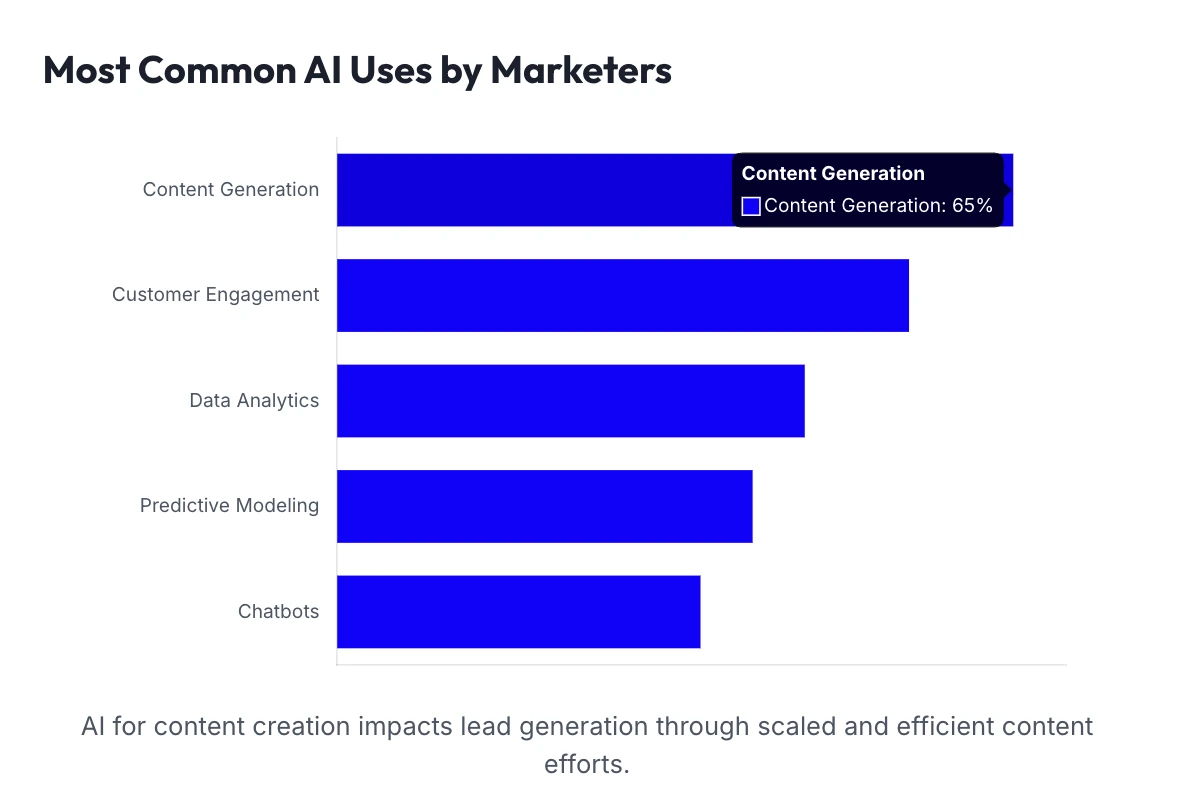
The traditional SDR model is being reconsidered across B2B organizations. Recent data shows 36% of B2B tech companies reduced SDR headcount in the past year, the highest cut of any sales role. Only 19% grew their SDR teams.
This shift reflects movement from quantity to quality in outbound prospecting. Instead of large teams generating volume through calls and emails, companies emphasize better targeting, deeper research, and strategic outreach with smaller teams.
The economics also matter. A fully-loaded internal SDR costs $100,000-$150,000 annually with average tenure around 14 months, creating constant turnover. This has led companies to explore alternatives like having AEs handle some prospecting, improving marketing lead generation, or partnering with specialized agencies.
For smaller companies, this trend validates that thoughtful outbound from a small team can outperform poorly-executed volume from a large team.
SDR tenure
internal SDR cost
prospecting
6. In-Market Signals Drive Better Results
Approximately 3% of your target market is actively buying at any given time. The remaining 97% may have needs but aren’t currently in buying cycles due to timing, budget allocation, or competing priorities.
Prospects showing buying signals (recent funding, new executive hires, technology implementations, content engagement, website visits) are significantly more likely to respond positively. They are in that active 3%.
The most effective 2026 outbound programs prioritize prospects with clear signals for manual, deeply personalized outreach. For the 97% without signals, lighter-touch automated sequences combined with marketing efforts maintain visibility until they enter active buying cycles.
This signal-based approach creates more predictable results by focusing effort where timing indicators suggest receptivity.
Step-by-Step Outbound Process Framework (2026 Edition)
Now let’s outline a concrete outbound process that incorporates these trends and realities into a practical, repeatable system.
Step 1: Define Your Target Accounts and Personas
Start by documenting your Ideal Customer Profile (ICP). What characteristics define companies and individuals most likely to buy and succeed with your solution? Consider company size, industry, location, technology stack, and growth indicators. Then identify specific roles with authority, budget, and motivation.
Use Q1 planning to incorporate lessons from previous results. Which account types converted fastest? Which industries showed strongest retention? Which personas engaged most during sales processes? Let actual data refine your targeting.
Identify high-intent signals that indicate active buying:
- Recent funding announcements or acquisitions
- Executive hiring in relevant departments
- Company expansion or new office openings
- Technology implementations complementing your solution
- Content engagement like downloads or webinar attendance
- Website visits or product page views
- Industry news mentions or press releases
Build your target list in tiers:
- High-priority accounts with multiple signals get immediate, deeply personalized outreach
- Good-fit accounts without clear signals receive well-researched but more scalable messaging
- Lower-fit accounts enter automated nurture sequences until stronger signals emerge
For each high-priority account, invest 10-15 minutes in manual research. Review their website, LinkedIn company page, recent news, and executive profiles. This confirms ICP fit and provides specific personalization hooks for your outreach.
Quality substantially outweighs quantity. A list of 200 meticulously researched prospects generates more pipeline than 2,000 unverified contacts.
Step 2: Warm Up Your Domain and Email Accounts
Before sending any cold outreach, ensure your technical infrastructure is properly configured. Configure SPF, DKIM, and DMARC records for your sending domain. These protocols verify you are authorized to send from your domain and prevent messages from being flagged.
Most email platforms provide setup documentation. Free online tools can verify your configuration is correct.
Implement gradual domain warming:
- Week one: Send 10-20 emails daily to engaged contacts (colleagues, existing customers, partners)
- Week two: Increase to 30-50 emails daily
- Week three: Increase to 75-100 emails daily
- Week four: Reach 150-200 emails daily (adjust based on your target volume)
Monitor key indicators throughout: delivery rates, inbox placement (test emails to your accounts across Gmail, Outlook, etc.), bounce rates, and any spam complaints. If warning signs appear, pause and investigate before continuing.
Consider using a separate subdomain specifically for cold outreach. If your company is acme.com, send from outreach.acme.com. This protects your primary domain. If deliverability issues arise on the outreach subdomain, your corporate emails remain unaffected.
Advanced teams maintain 2-3 warmed domains in rotation, providing backup capacity if one domain encounters issues.
Step 3: Craft Personalized Cold Emails with Value
Effective cold emails in 2026 share common characteristics: brevity (75-100 words maximum), research-based personalization, value focus rather than feature lists, and clear but low-pressure calls-to-action.
A cold email structure that works consistently:
1. Opening (1 sentence): Personalized hook demonstrating research “Sarah, I noticed you recently hired two SDRs. Congratulations on expanding the team.”
2. Value statement (2-3 sentences): Why you’re reaching out and what you offer “Team growth typically means scaling outbound operations, which often surfaces email deliverability challenges that can stall pipeline development. We help B2B teams establish infrastructure that consistently reaches inboxes, even when sending thousands of cold emails weekly.”
3. Call-to-action (1 sentence): Simple, specific request “Would a 15-minute conversation about avoiding common deliverability issues be helpful as you ramp the team?”
4. Signature: Your name, title, and company
Notice what’s absent: no lengthy company descriptions, no bulleted feature lists, no aggressive calendar booking demands, no artificial urgency or scarcity.
Plain text formatting works best for cold outreach. HTML emails with images and complex layouts often trigger spam filters and feel impersonal. Your cold email should look like it came from a regular email client.
Keep subject lines simple and relevant. Either reference the personalization point (“Quick question about SDR scaling”) or be direct about purpose (“Improving email deliverability for [Company Name]”). Avoid clickbait, excessive punctuation, or all caps.
Test different variations of your template. Try two different value propositions or opening hooks and track which generates better response rates. Small optimizations compound over time.
Review every email before it sends. Even using templates and automation, verify the personalization makes sense, the message is accurate, and the tone is appropriate.
Step 4: Build a Multi-Touch Outreach Cadence
Single emails rarely generate responses regardless of quality. Multi-touch cadences across email, LinkedIn, and phone increase connection likelihood when timing and channel preferences align.
Design your sequence before launching campaigns. Map 6-8 touchpoints over 2-3 weeks, varying both the communication channel and the value provided.
Example of a multi-touch outbound framework:
Day 1: Send initial personalized email (introduces you, demonstrates relevance, makes initial request)
Day 2: Send LinkedIn connection request with brief personalized note (don’t pitch, reference common ground or mention the email)
Day 3: Monitor engagement (did they open email, click links, view your LinkedIn profile)
Day 4: Make phone call attempt (if voicemail, leave concise message under 30 seconds stating who you are, why you’re calling, how to reach you)
Day 5: Send brief follow-up email (reply to original thread for context, keep short and friendly)
Day 7: Engage on LinkedIn (like or comment on their post, or send brief message offering value if connected)
Day 10: Send value-add email (share relevant case study, industry benchmarks, or useful insights, not just “checking in”)
Day 14: Send friendly closing message (acknowledge they’re busy, keep door open, indicate you’ll stop reaching out)
Day 15+: Optional final call attempt
Research shows response rates improve with each touchpoint up to approximately the eighth contact. Many successful deals began with responses on the fifth, sixth, or seventh touch. Nearly half of sales reps never follow up once, despite 80% of sales requiring five or more follow-ups.
Key principles for cold email sequences:
Vary the value at each touch. Don’t send the same message repeatedly with minor variations. Each touchpoint should offer something new or use a different approach.
Maintain a helpful, professional tone. Never guilt-trip prospects for not responding. Assume they’re busy rather than deliberately ignoring you.
Monitor engagement signals. If prospects open emails multiple times but don’t respond, they’re interested but hesitant. Try a different channel or more direct approach.
Respect clear “no” signals. If someone asks you to stop contacting them, honor that immediately and remove them from sequences.
Step 5: Measure Results and Refine Your Outbound Pipeline
Outbound becomes predictable through systematic measurement and data-driven optimization. Track metrics that indicate program health and identify improvement opportunities.
Essential cold outreach metrics to monitor:
- Activity: Emails sent, LinkedIn messages sent, calls attempted/connected, accounts reached
- Engagement: Email open rates, click-through rates, LinkedIn connection acceptance, message response rates, calls answered
- Response: Total replies, positive responses (interested in conversation), meetings booked, qualified opportunities created
- Deliverability: Bounce rate, spam complaint rate, inbox placement percentage
Set up a simple dashboard to track these weekly. Most sales engagement platforms provide built-in reporting. Basic spreadsheets work initially for simpler tools.
Realistic industry benchmarks for cold outreach:
- Email open rates: 30-50%
- Overall reply rates: 3-8%
- Positive response rates: 1-3%
- Meeting booking rates: 0.5-2%
Numbers within or above these ranges indicate solid performance. Significantly below suggests examining targeting, messaging, or deliverability.
Pay attention to which sequence steps generate engagement. If prospects frequently respond after LinkedIn messages but rarely after emails, consider moving LinkedIn earlier in your cadence. If phone calls consistently go unanswered, reduce call attempts and reallocate time to deeper research.
Implement small tests to optimize performance. Try two different email subject lines with half your prospects and compare open rates. Test sending at different times and measure response patterns. Experiment with different value propositions.
Gather qualitative feedback when possible. If prospects respond positively, ask what caught their attention during calls. If someone asks to be removed, politely inquire if anything about your approach could improve.
Review your cadence weekly and adjust based on patterns. Are certain prospect types responding better? Consider refining your ICP. Is one email generating most responses? Understand why and apply those principles elsewhere. Are response rates declining? This might indicate list quality issues or deliverability problems.
The goal is continuous improvement toward predictable results. Document what works, eliminate what doesn’t, and build institutional knowledge about which tactics generate pipeline for your specific business.
per prospect
sequence
booking rate
Common Outbound Mistakes To Avoid
Understanding what doesn’t work helps you avoid undermining your outbound program.
❌ Buying Lists and Blasting Volume
Purchased lists typically contain outdated information and contacts who never opted in to hear from you. When you send to these lists, you see high bounce rates that damage sender reputation and spam complaints from recipients who don’t recognize your company. With 2024’s stricter policies, a few spam reports can trigger domain blocks affecting all your emails.
Response rates from purchased lists are extremely low. These contacts didn’t express interest, don’t fit your actual ICP, and have likely received dozens of emails from other companies that bought the same list.
Build targeted lists from verified sources instead. Use LinkedIn Sales Navigator, industry databases, or your own research. Verify email addresses with validation tools before adding to sequences. A list of 500 well-researched contacts consistently outperforms 10,000 random emails in both response rates and deliverability.
❌ Over-Relying on Automation Without Human Oversight
Sales engagement platforms can execute sequences, schedule follow-ups, and track metrics, making them valuable for scaling. However, treating them as fully automated systems leads to impersonal outreach that prospects immediately recognize and ignore.
The issue isn’t automation itself. It’s automating before validating your approach. If messaging doesn’t work manually, automation simply scales failure more efficiently. Fully automated outreach also lacks flexibility to adjust based on context or engagement signals.
Use automation for operational tasks like scheduling, reminders, and tracking while maintaining human judgment for strategic decisions. Review sequences regularly. Set up alerts for engagement signals that should trigger human review rather than just continuing automated sequences.
AI tools can draft emails based on prospect research, but humans should always review and adjust to ensure messages feel authentic and appropriately personalized.
❌ One-Size-Fits-All Messaging
Generic emails are immediately recognizable. If your message could be sent to any company without changing a word, prospects will ignore or delete it.
The challenge is balancing personalization with scale. Writing completely unique emails for hundreds of prospects isn’t sustainable, but identical messages to everyone produces minimal responses.
Use tiered personalization based on account value. High-value accounts (top 10-15%) warrant 15-30 minutes of deep research and customized emails. Good-fit prospects (next 30-40%) get templated structure with personalized opening hooks. Volume outreach gets segment-specific messaging addressing common challenges within groups.
Many successful teams use “first line personalization,” writing custom opening sentences for each prospect (1-2 minutes) while the rest follows a proven template. This demonstrates basic research without requiring extensive time per email.
❌ Giving Up Too Soon
Research indicates 80% of sales require at least five follow-ups after initial contact, yet nearly half of sales reps never follow up once. Many promising leads don’t respond immediately because they’re busy or timing isn’t right, not because they’re uninterested.
Each additional touch increases response likelihood. Research shows the eighth touchpoint often yields highest conversion rates. If you stop after two or three touches, you never reach potential engagement moments.
Plan your follow-up cadence in advance. Map 6-8 touches over 2-3 weeks, varying both channel and value offered. Each follow-up should provide something new rather than just asking if they saw your previous message.
Track engagement signals. If someone opens emails multiple times or clicks links, prioritize them for personalized follow-up. If you get no engagement after sequence completion, move them to longer-term nurture campaigns rather than deleting them.
❌ Ignoring Deliverability Warnings
Deliverability problems develop gradually as sender reputation degrades. Many teams miss early warnings and continue sending until emails stop reaching inboxes, making recovery difficult.
Common warning signs include declining open rates despite consistent list quality, increasing bounce rates, test emails landing in spam folders, any spam complaints in metrics, and email platform warnings about reputation.
Monitor deliverability metrics as closely as response rates. If open rates decline from 30% to 15% over a few weeks, pause and investigate immediately. Check domain authentication configuration, review email content for spam triggers, verify you’re not sending to invalid addresses, and confirm sending volume hasn’t increased too rapidly.
Use email deliverability testing tools that analyze your emails before sending at scale. Consider using separate domains for cold outreach to protect your primary domain.
Maintaining good sender reputation is significantly easier than recovering from being blacklisted. Proactive monitoring and immediate response to warning signs prevents minor issues from becoming serious problems.
Tools to Support Your Outbound Process
The right tools improve efficiency and effectiveness when used appropriately.
1. Sales Engagement Platforms:
Outreach, Salesloft, Apollo, and HubSpot Sales Hub organize sequences across email, phone, and LinkedIn. They automate scheduling and tracking while you maintain control over who receives outreach and when to adjust based on engagement.
2. LinkedIn Sales Navigator:
Sales Navigator is essential for B2B research and targeting. Advanced filters identify prospects by role, company size, industry, and geography. Save searches and check regularly for new prospects matching your criteria.
3. Data Enrichment and Verification:
Tools like Clearbit, ZoomInfo, Cognism, and Apollo provide contact data. Always verify critical information before adding to sequences using email verification tools like NeverBounce, ZeroBounce, or Hunter.io.
4. Email Deliverability Tools:
Use authentication checkers (verify SPF, DKIM, DMARC), spam testers (Mail-Tester, GlockApps), warm-up services (Warmbox, Mailwarm, Lemwarm), and inbox placement testing services.
4. CRM and Pipeline Tracking:
HubSpot, Salesforce, and Pipedrive tie all activity together. Track conversion rates to forecast activity needed for pipeline goals.
5. AI Assistants:
Useful for drafting emails and summarizing notes, but always review output for tone, accuracy, and authenticity before sending.
When to Consider External Partners for Outbound
External partners like specialized agencies, fractional SDRs, or outsourced teams can accelerate results in specific situations.
1. When It Makes Sense
External partners work well when you have limited internal resources, are testing new markets, need to scale beyond current capacity, or require rapid ramp. A fully-loaded internal SDR costs $100,000-$150,000 annually while agencies might provide comparable coverage for $40,000-$60,000 per year depending on scope.
For teams looking to implement these 2026 best practices without building infrastructure from scratch, specialized outbound agencies like Rev-Empire focus specifically on the strategies outlined in this guide: multi-touch sequences, proper deliverability management, signal-based targeting, and human-reviewed personalization. Their approach aligns with the quality-over-quantity shift that’s defining successful outbound in 2026.
2. Key Considerations
External partners represent your company to prospects. Establish clear guidelines about messaging, tone, and approach. Review actual outreach regularly rather than just looking at metrics. Build in mechanisms for knowledge transfer through regular debriefs and shared recordings.
You must provide clear ICP definition and strategy. Partners execute it but can’t define it for you. The most successful relationships involve close collaboration with weekly alignment meetings and shared dashboards.
Monitor their work closely, especially initially. Some agencies default to volume-based tactics that could damage your brand or domain reputation. Look for partners who emphasize the same principles we’ve covered: authenticated domains, gradual warming, research-backed targeting, and value-focused messaging.
3. Questions to Ask Potential Partners
What’s their process for researching and personalizing outreach? How do they handle deliverability and domain reputation? What level of transparency and reporting do they provide? How do they stay current with evolving best practices? What results have they achieved for similar companies?
Ask specifically about their approach to the 2024 email authentication requirements and how they protect client domains. Partners who understand deliverability infrastructure, use separate domains for cold outreach, and monitor spam complaint rates demonstrate awareness of current best practices.
4. Making the Decision
Many successful teams use hybrid approaches: internal SDRs for high-value accounts requiring deep product knowledge, external partners for broader market coverage, and marketing for supporting content that warms prospects.
Consider starting with a limited pilot targeting one segment or region to evaluate results and fit before making larger commitments. Set clear success metrics upfront: meeting booking rates, qualified opportunity creation, and cost per meeting compared to internal benchmarks.
Conclusion
Outbound sales has fundamentally changed, but success is achievable for teams willing to adapt. Here’s what matters:
- Technical foundation first: Properly authenticate and warm your domains, monitor deliverability metrics, and use separate domains for cold outreach
- Quality over volume: Build targeted lists based on buying signals, verify contact data, and focus on ideal-fit prospects
- Multi-touch persistence: Execute 6-8 touchpoints across email, LinkedIn, and phone over 2-3 weeks
- Human-AI balance: Use automation for operational tasks, but maintain human oversight for strategy and personalization
- Continuous measurement: Track metrics, test variations, and optimize based on what actually drives results
Whether you build internally, partner with specialized agencies, or use a hybrid approach, the framework for predictable outbound exists. The tools are available. The best practices are proven. Now it’s about execution.
Table of Contents
- TL;DR
- What Is a Predictable Outbound Process?
- Q1 2026 Outbound Planning: Start the Year Strong
- Key Outbound Outreach Trends for 2025–2026
- Step-by-Step Outbound Process Framework (2026 Edition)
- Common Outbound Mistakes To Avoid
- Tools to Support Your Outbound Process
- When to Consider External Partners for Outbound
- Conclusion
- FAQ: Building a Predictable Outbound Sales Process
Share on socials
FAQ: Building a Predictable Outbound Sales Process
Q: How many touches work best in outbound?
There’s no universal number, but generally more than you think – usually around 6-8 touches over a couple of weeks. Many prospects reply on the 5th, 6th, or even later contact. Every situation varies, but plan for a multi-touch cadence (mixing emails, calls, LinkedIn). Research shows response rates tend to peak around the eighth touch, so five or more quality touches is a good target.
What makes a cold email “predictable” in 2026?
A predictable cold email is one that consistently gets responses because it’s targeted and relevant. In 2026, that means your email is going to the right person (clean data), says something that matters to them (personalization), and doesn’t trigger spam filters (good deliverability practices). It’s about a repeatable process: find a pain point, mention it briefly, offer value, and ask a simple question. Also, being human and honest in tone (not gimmicky) makes your outreach more predictably successful, since buyers are more likely to respond to something that feels genuine.
Can a small team build outbound pipeline without dedicated SDRs?
Yes, a small team can absolutely do outbound. It just requires smart use of resources. Often, a founder or sales lead might do the first wave of outbound themselves to get the ball rolling. Focus on a narrow ICP and really personalize your outreach (quality over quantity). You can also leverage part-time help or an outsourced agency for pieces of the process (like list building or initial outreach).
The key is consistency: even if you don’t have an SDR, set aside time each day or week to execute your outbound sequence. As you prove it out, you might hire an SDR or continue to supplement with external help. Plenty of small businesses book meetings through the CEO’s emails combined with automation tools – it’s about the message and process, not team size.
How long does it take to warm up a domain safely?
Plan on 2 to 4 weeks to properly warm up a new email domain. In week 1, send only a handful of emails per day (e.g. 10-20) to trusted contacts or use an auto-warm service where other participants reply to each other. Gradually increase the volume each week. By week 3 or 4, you might ramp to a few hundred emails/day if needed – but monitor for any spam flags. The goal is to build a positive sending reputation with consistent activity and no spam reports.
Even after warm-up, continue sending in moderate batches and keep an eye on engagement. If you ever see deliverability dip, sometimes you might pause sending for a few days to “cool off” or use another warmed domain in the rotation.
What’s a realistic reply rate for cold outreach in 2025-2026?
It varies by industry and how targeted your approach is, but broadly speaking, a reply rate of 5-10% is quite good for truly cold outbound. Many well-run campaigns might see ~3-5% reply rates. Remember, that includes any reply (even a “not interested” is a reply). Positive response rates (people who want a meeting) will be a subset of that – often 1-3% is actually considered decent for cold outbound. It sounds low, but if you email 1000 ideal prospects and 20 of them become sales conversations, that can be a big win depending on your deal size.
The key is that with a predictable process, you can roughly count on that percentage each time and scale accordingly. If your numbers are much lower (say 0.5% reply), then you likely need to tighten your targeting or message. And if you’re higher (15%+), great job – just ensure you can handle the responses! Always compare against your own past performance and keep improving.
How do I personalize outreach without spending hours on each prospect?
The trick is to find repeatable personalization points. Instead of writing totally unique paragraphs for everyone, develop a few buckets. For example, group prospects by industry or role and write a sentence that would resonate with each group. Use mail merge fields smartly – like referencing their company or recent news (which you can often pull from a database or Google Alert).
Tools like LinkedIn can show you something quick – e.g., “noticed you posted about X, loved your point on Y.” Keep a template structure: “Hi {Name}, noticed {Personalized Hook about them}. We help companies with {pain you solve}. Thought I’d reach out to share {value or insight}. – {Your Name}”. That hook can be filled in with a little research.
Also, use automation for the grunt work (scheduling emails, reminding you to follow up) so you can spend the extra few minutes it takes to personalize each message. Focus on balance. You won’t write a 100% custom letter for each person, but even 10% customization can make a huge difference, and templates + tools can handle the rest.