Appointment Setting in 2026: Our Process, What to Expect & Common Questions Answered
Introduction
This guide is for B2B companies that face a recurring challenge with revenue predictability and want consistent qualified meetings without relying on referrals or inbound channels. We’ll explain our appointment setting process, what makes meetings qualified, realistic timelines, and address the questions most agencies avoid.
At Rev-Empire, we build outreach systems that run every week. This isn’t a one-time campaign or purchased lead list. It’s structured weekly execution designed to create ongoing conversations with your target market. We focus on building the foundation in first 30 days and then the results compound from there.
Why Most Appointment Setting Fails
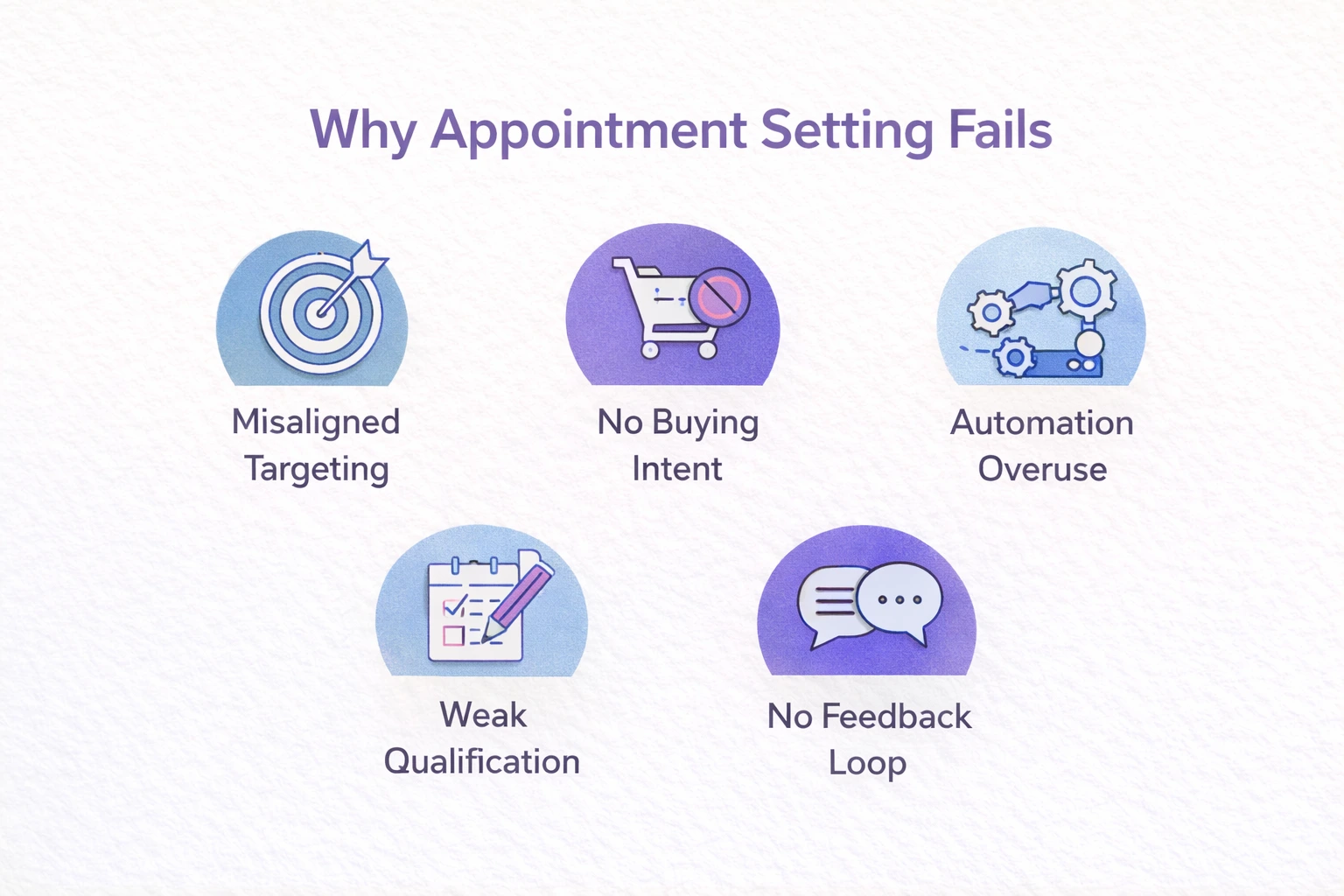
Before explaining our process, it’s important to understand why appointment setting so often produces disappointing results. We found these concerns come up regularly in founder communities and Reddit discussions. We also hear the same issues directly in our client conversations, especially with teams that have tried appointment setting before and struggled to get consistent, qualified meetings.
- First, misaligned target profiles. Different teams operate with different expectations of what a “good prospect” looks like. Leadership pushes for revenue impact, while targeting decisions are often made using broad or outdated criteria. This disconnect leads to meetings that technically fit the brief but don’t align with what the business can realistically convert.
- Second, no intent filtering. Prospects match firmographics but have no reason to buy. Volume-focused approaches prioritize anyone fitting basic criteria regardless of buying readiness and eventually these conversations go nowhere.
- Third, automation overuse. Highly AI-generated copy in outreach lacks any human empathy destroys trust and as a result, generates low reply rates. Also, fully automated outreach end up damaging sender reputation and train prospects to ignore messages.
- Fourth, vague qualification standards. Anyone who accepts a calendar invite counts as qualified. This leads to no-shows, mismatched conversations, and sales teams rejecting leads as worthless.
- Fifth, no feedback integration. Same campaign runs for 90 days with same results. Agencies don’t adjust based on which meetings convert or why prospects weren’t the right fit.
And that’s exactly why our process is structured the way it is. Each step directly addresses the issues above, from unclear targeting and weak qualification to lack of feedback and overreliance on automation.
Our goal is simple: remove the friction points that consistently derail appointment setting and replace them with a system that holds up over time.
How B2B Appointment Setting Works: Our 6-Step Process
Our approach combines strategic planning, manual research, and multi-channel outreach. Email serves as the primary channel, supported by LinkedIn and selective cold calling based on industry and buyer behavior. We use AI for research and data tasks, but sales conversations remain human-driven.
Step 0: Email Infrastructure Setup (Protects Deliverability)
Before outreach begins, we establish dedicated email infrastructure. This involves setting up a subdomain for your company and configuring multiple email addresses in Microsoft 365. These addresses go through a 7-10 day warmup process to establish sender reputation.
This protects your primary domain from deliverability issues. If outreach encounters problems, your main business communications remain unaffected. Without proper infrastructure, even well-crafted messages end up in spam folders. This step runs in parallel with strategy development, so there’s no delay when we are ready to launch.
Step 1: ICP Research and Development (Prevents Misaligned Targeting)
We begin with detailed discussions with your team to understand your current customer base. Which customers are most profitable? Which convert most easily? Which create the least friction in the sales process? We also conduct industry research to map competitor positioning, pricing benchmarks, common pain points, and value propositions specific to your market.
We identify 3-4 distinct segments (or ICPs) through this process that our team can target effectively. We use AI tools during initial research, particularly when clients don’t have full clarity on their ideal customer profile yet. However, strategic decisions about which profiles to pursue remain human-driven. This prevents the misalignment that causes meetings with prospects sales can’t close.
Step 2: Messaging Strategy and Testing (Reduces Generic Outreach)
Once target profiles are defined, we develop messaging tailored to each segment. Each prospect typically receives 5-8 touchpoints across channels: approximately 5 emails and 3 LinkedIn touchpoints. We create multiple message variations and run structured tests to determine what generates engagement.
We monitor engagement metrics continuously and adapt messaging based on performance data. These changes don’t happen frequently. We typically allow campaigns sufficient time (at least a couple of weeks) to produce reliable signals before making significant strategic changes. This approach prevents the spray-and-pray methodology that produces low response rates.
Step 3: Manual Data Collection and Validation (Avoids Bounces, Low-Quality Lists, and Spam Risk)
After target profile and messaging approval, our team begins manual data collection. This involves focused account research using Sales Navigator to identify prospects with existing needs or intent signals. We then use specialized tools to find and validate email addresses.
Email validation is non-negotiable for us. High volume of bounced emails through new subdomain can damage domain very quickly and ruin the brand reputation with email providers. Hence, we verify every address before it enters our outreach list. All data is stored in standardized templates for consistent use across campaigns.
Step 4: Campaign Launch and Optimization (Builds Momentum Strategically)
Once infrastructure, targeting, messaging, and data are ready, we the launch outreach campaign. Our team starts with controlled volume and gradually increases as we monitor performance. We analyze results weekly, tracking which segments generate opens, which drive engagement, which messages receive replies, and which geographies show strongest response.
This data informs ongoing adjustments, but again, we don’t overreact to short-term fluctuations. Through our experience, we understand that appointment setting requires time to produce reliable patterns and results.
Step 5: Delivery and Feedback Integration (Improves Over Time)
Results are delivered through structured monthly reports in online meetings. We also provide ongoing feedback throughout the month on performance trends and support needs.
When meetings are booked, we share complete context: the prospect’s engagement journey, research findings about their company, and suggested talking points for the call. After each meeting, we collect feedback on conversation quality and fit. This feedback refines messaging for ongoing campaigns, preventing the static approach that fails to improve results over time.
What We Mean by a Qualified Meeting
Defining what makes a meeting qualified is critical when working with an external appointment setting agency. Definitions vary widely, and without clarity upfront, qualification becomes subjective. That usually leads to misaligned expectations, disputes over performance and frustration on both sides.
Here’s how we define a qualified meeting at Rev-Empire.
A qualified meeting is a scheduled conversation that happens, with a company that fits your target profile, where the discussion is relevant to a real problem your business can solve.
To keep this practical and measurable, a qualified meeting typically meets the following conditions:
The company fits your ideal customer profile.
Industry, size, and business model align with who you can realistically sell to. This is non-negotiable. If the company itself is a poor fit, the meeting rarely creates downstream value.
The conversation is relevant.
The discussion connects to a problem, challenge, or situation your solution addresses. The prospect doesn’t need to be actively buying, but the conversation must have substance beyond surface-level curiosity.
The meeting aligns with the campaign objective.
Some campaigns are designed to generate near-term pipeline. Others focus on entering new accounts or markets. What qualifies as a good meeting depends on that objective, and we define this upfront before outreach begins.
The meeting takes place as scheduled.
We only count meetings where the prospect shows up. No-shows don’t create value and aren’t treated as outcomes.
This definition removes ambiguity upfront. It sets clear expectations on what counts, what doesn’t, and why. More importantly, it ensures the meetings generated are ones your sales team can realistically progress, not just report on.
What to Expect in the First 30 Days
At Rev-Empire, the first 30 days focus on putting the outbound strategy into the market and validating it with real engagement signals. Outreach is live during this period and meetings can start getting booked. At the same time, we build visibility into which strategies are working and which are not so all the decisions are based on data or benchmarks, not assumptions.
In practical terms, you should expect three things.
- First, you will start receiving the market feedback. Some prospects will ask questions, some will push back, and some will agree to an initial conversation. These responses show whether the strategy is reaching the right accounts and whether the positioning makes sense to real buyers.
- Second, you will be able to prioritize strategies. Patterns begin to emerge across segments and messaging. Certain audiences engage consistently while others do not. Some subject lines and messages lead to conversations, while others lead to unsubscribes. This makes it easier to focus effort on what actually produces meetings instead of spreading activity evenly.
- Third, you get structure around performance. We review results daily internally with our SDRs and share detailed weekly reporting across different channels, messaging and ICP performances with clear metrics. This keeps expectations aligned and removes guesswork. By the end of the first month, you have a clear view of what should continue and what needs adjustment.
The goal of the first 30 days for us is simply to build confidence in the strategy through real conversations and transparent reporting.
By the end of that period, you are no longer guessing whether outbound can work for your business. You have clear evidence from the market, a validated strategy informed by actual buyer behavior, and reporting that shows what should continue and what needs adjustment.
How We Select Outreach Channels
Channel selection varies by client and industry. For most clients, email marketing combined with LinkedIn outreach produces the strongest results.
For most B2B companies, email combined with LinkedIn works best because it allows consistent outreach without demanding immediate attention from the prospect. These channels give buyers the space to respond when timing is right, which is how most real B2B conversations start today.
Cold calling is added selectively based on buyer behavior and industry norms.
Based on our experience, calling works when buyers expect phone outreach and the sale requires relationship-building conversations. For example, in financial services, enterprise software, complex solutions, or roles where voice contact is still preferred.
Calling fails when the category is email-first or when buyers actively avoid unsolicited calls. That is why calling is never treated as a default channel for us. It is used selectively, based on how buyers in your specific market actually behave.
What We Deliver (And What We Don’t)
Before starting outbound, it’s important to be clear about what appointment setting can realistically deliver and where its responsibility ends. Most frustration with agencies comes from unclear expectations, not poor intent.
The table below outlines exactly what we take ownership of and what sits outside the scope of appointment setting, so there are no surprises once execution begins.
Common Questions About Appointment Setting
These questions come from founders and sales leaders exploring appointment setting or evaluating past experiences with agencies. Here are direct answers.
Why should I choose an ongoing system instead of a one-time campaign?
One-time campaigns create temporary activity but don’t build a sustainable pipeline. Campaigns typically run for 30 or 60 days, generate some initial interest, then stop. Prospects who weren’t ready during that window never hear from you again. Market awareness disappears after the campaign ends.
Ongoing systems work differently. Target accounts see consistent strategic outreach every week. When their situation changes or needs arise, your company is already present with relevant messaging. This builds familiarity over time and allows continuous optimization based on market feedback, not just one point-in-time snapshot. An ongoing approach also provides control over pipeline generation rather than dependence on campaign timing or referral availability.
How do I know appointment setting will work for my business?
This question typically comes from previous negative experiences with agencies. The straightforward answer is that results depend on proper execution of the structural elements we’ve outlined: clear target definition, intent-based outreach, quality standards, and feedback integration.
We recommend pilot engagements for companies evaluating appointment setting. A 30-day pilot demonstrates our approach, strategy, and execution standards. This allows you to evaluate fit based on actual performance rather than promises. Our business depends on delivering results, so we have direct incentive to make the pilot successful.
Why do booked meetings often result in no-shows or poor qualification?
At Rev-Empire, we only charge for meetings where prospects attend. No-shows aren’t billed. Poor qualification typically stems from misaligned target definitions. We dedicate significant time at engagement start to align on ideal customer profile with your team. This alignment is critical because messaging, outreach approach, and channel selection all depend on having the correct target definition.
We often work with multiple stakeholders at client companies to establish clear ideal customer definition, since different departments frequently have different perspectives. Clear alignment prevents meetings with prospects who don’t match what your sales team can realistically close.
Should we hire internal SDRs or outsource appointment setting?
This depends on your budget, timeline, and internal capabilities. We work alongside internal sales teams for some clients, functioning as an extension of their operations. Their teams learn from our processes while we collaborate on execution. However, if you prefer not to maintain both internal resources and an agency relationship, working exclusively with an agency provides strategic experience and lessons from other industries without building that knowledge internally.
Outsourcing eliminates the hidden costs and management overhead of internal hiring: ramp-up time, benefits administration, turnover risk. For many companies, this represents the fastest path to outbound capacity without adding headcount.
Can a third-party agency represent our brand appropriately?
Yes, but it requires collaboration from both parties. Clients need to provide feedback to ensure brand representation aligns with their standards. This follows the same process you would use with new internal hires: proper onboarding, clear expectations, then operational execution.
We maintain close collaboration from day one through weekly or sometimes daily feedback sessions. When client expectations appear misaligned with market reality, we communicate that directly. We don’t commit to deliverables we know are unachievable. Our focus is long-term partnerships rather than short-term projects, so honest communication takes priority over avoiding difficult conversations.
Why do AI-powered SDR tools typically produce minimal results?
Fully automated outreach faces structural challenges. Automated systems lack the contextual understanding required for effective B2B sales conversations. They can’t adapt to nuanced responses, recognize subtle buying signals, or adjust messaging based on conversation flow. We use AI for research, data analysis, and administrative tasks, but sales conversations remain human-driven because relationship-building requires human judgment.
Why has outreach response rate declined industry-wide?
Widespread automation adoption has created significant challenges. Most inbox providers now deploy sophisticated spam filtering that catches automated patterns. Automated emails frequently never reach primary inboxes. This doesn’t just reduce campaign performance but damages domain reputation, which can negatively affect overall website visibility in search engines.
Volume-focused approaches prove counterproductive when the objective is quality conversations with specific target accounts. Our approach emphasizes manual execution and strategic targeting. While AI tools provide value for research and efficiency, full automation of sales conversations undermines the relationship-building that B2B sales requires.
Final Thoughts
Effective appointment setting in 2026 requires strategic thinking, consistent execution, and realistic expectations. It’s not about sending more emails or making more calls. It’s about building a structured program that runs weekly, targets the right accounts with relevant messaging, and creates qualified conversations over time.
Companies that succeed with outbound understand this isn’t a quick solution. It’s infrastructure that replaces unpredictable referrals and founder-led prospecting with systematic pipeline generation. When executed properly, you gain visibility into where your next customers will come from because you’re actively creating those relationships through consistent weekly outreach.
If you want to explore what a structured outbound system could look like for your business, we can discuss your specific situation, target market, and objectives to determine if this approach aligns with your goals.
Reach out to Rev-Empire today at